
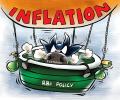
RBI's policy statement highlights the fact that core consumer price inflation remains obdurately high at about eight per cent.

After a good show in 2010-11, the economy has now started to show signs of fatigue.

After three consecutive years of infusing huge funds, foreign portfolio investors retreated from the Indian equity markets in a big way in 2022 with the highest-ever yearly net outflow of nearly Rs 1.21 lakh crore. The huge outflow, which surpasses by a big margin the previous record of Rs 53,000 crore net withdrawal in 2008, came amid aggressive rate hikes by central banks globally but 2023 is expected to be better on positivity about overall macroeconomic trends in India, experts said. Apart from global monetary tightening, volatile crude, rising commodity prices along with Russia and Ukraine conflict led to an exodus of foreign money in 2022.
Das said that global economic activity has remained fragile and the surge in COVID-19 cases has subdued early signs of revival.

The Reserve Bank's rate-setting panel will start its 3-day deliberations on Wednesday amid expectations of yet another rate hike of 50 basis points to check high inflation, in line with similar actions taken by other major central banks, including the US Fed. Based on the recommendations of the Monetary Policy Committee (MPC), the RBI had effected 50 basis points increase in repo rate each in June and August after raising the short-term lending rate by 40 basis points in an off-cycle decision in May. The MPC, headed by RBI Governor Shaktikanta Das, is scheduled to meet during September 28-30.

The Reserve Bank on Friday projected retail inflation to be in 5-5.2 per cent range during the first half of the next fiscal year, expecting further softening of vegetables prices in near term. Also, it has lowered the retail inflation forecast for the current January-March quarter of 2020-21 fiscal at 5.2 per cent. The Reserve Bank (RBI) has kept the key policy rate unchanged at 4 per cent, with an accommodative stance, so as to ensure that inflation remains well within the target, Governor Shaktikanta Das said while announcing the last monetary policy of 2020-21.

Banks are clear that lending rates are not going to fall further, say Hamsini Karthik and Anup Roy.

BSE-Capital goods, banks, FMCG drag index down.

Service providers' confidence with regard to the 12-month outlook for business activity remained positive.

Foreign brokerage Bank of America Merrill Lynch (BofAML) on Friday said a "dovish" Reserve Bank will slash key interest rates by 0.25 per cent at the February review meet and will do cuts of 0.75 per cent in 2015.

With inflation spreading to non-food items, the Reserve Bank is likely to further tighten its monetary stance in its forthcoming annual policy, which may jack up interest rates, Citigroup said.

In the last policy review in December, RBI had decided to keep policy rate unchanged.

Credible fiscal consolidation has been a consistent pre-condition to easing the monetary policy stance as far as the RBI is concerned.

Foreign investors pumped in Rs 11,119 crore in the Indian equities in December, making it the second consecutive monthly inflow, despite increasing concerns over the re-emergence of Covid-19 cases in some parts of the world. However, foreign portfolio investors (FPIs) have turned cautious in recent days. The inflow in December was much lower compared to Rs 36,239 crore invested by FPIs in the month of November, data with the depositories showed.

The repo rate, at which the central bank lends short-term money to other banks, will continue to stay at 6 per cent.
Amid a steep slowdown in credit off-take and an unexpected spike in deposits, bankers on Monday urged Reserve Bank of India to hold the policy rates at the current levels, and sought a clearer picture on the future interest rates and inflation at the policy review next week
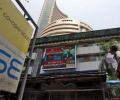
The stock markets, which had opened in the green on rate cut hopes, tumbled after the monetary policy announcement.

Gold prices hit record high in the third week of March as fears of bank collapses and high inflation led investors to the traditional safe haven. Gold prices are often inversely correlated to dollar strength because the international price is dollar-denominated. The Federal Reserve's (Fed's) stance indicates that the dollar may appreciate further since it is prepared to keep pushing up policy rates. But demand for gold is also up - the World Gold Council claims central banks are buying in addition to private demand.
Repo rate may well end 2013 at 8 per cent, where it had begun the year.

The Reserve Bank of India on Thursday said the Greek debt crisis would not change its roadmap to exit from the accommodative stance, as the central bank has already factored in the impact of global uncertainties in its exit-policy.

The Reserve Bank of India is likely to announce a "gradual" exit from its easy money stance and may resort to raising key rates to squeeze out excess liquidity from markets in its forthcoming review meeting, investment banking firm Barclays Capital says.
With pricing power of producers unlikely to strengthen and commodities ex-crude oil likely to remain sluggish in the immediate term, the core-WPI inflation may remain sub-zero in the rest of this calendar year.

Nifty ended at 5,447 -- down 65 points.

'Policy was more in line with the expectations.'

Shaktikanta Das is a master of the finest balancing act who listens to all but takes his own decisions, discovers Tamal Bandyopadhyay.

Analysts and the media have near-unanimously approved the latest monetary policy update of the Reserve Bank of India which has left key interest rates unchanged, while indicating that its accommodative stance will continue until recovery becomes more robust. But it is possible to question whether this halfway house is the right place to be in right now.

All-out efforts are needed to mitigate the adverse impact of the Covid-19 pandemic, and the RBI will use any instrument necessary to revive growth and preserve financial stability, according to the minutes of the central bank's policy meeting.
India's banks rely on overnight borrowings to fund longer-term lending.

RBI had said last week it would continue with the monetary tightening till the inflation trajectory showed a downward trend.

Projecting that inflation would touch 8.56 per cent by current fiscal-end, the RBI had sucked out about Rs 36,000 crore (Rs 360 billion) from the banking system to check the rising prices. Over one-year high inflation was led by costlier sugar and potato prices.

Describing the recent two consecutive spikes in retail inflation beyond the 6 per cent as a 'transitory hump', a Wall Street brokerage on Monday said it expects the RBI to overlook it and unanimously stick to the dovish stance at the forthcoming policy review, even though a further upward revision of its already-revised inflation target is more likely. The Reserve Bank-led monetary policy panel is scheduled to announce the third monetary policy review on August 6, amidst the continuing spike in retail inflation that has breached the 6 per cent upper tolerance level for the past two consecutive months.
The Reserve Bank of India on Monday gave strong hints of another hike in its key interest rates at the policy review on Tuesday, saying that high inflation requires further monetary tightening, slowdown in growth notwithstanding.
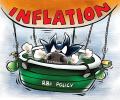
The Reserve Bank of India on Friday raised the retail inflation forecast for 2021-22 to 5.7 per cent due to supply side constraints, high crude oil and raw materials cost. The RBI in June had pegged the retail inflation estimate at 5.1 per cent for the current financial year. The RBI has the mandate to keep inflation in a band of 2-4 per cent, with a tolerance level of 2 per cent on either side.
The Reserve Bank of India (RBI) will stay away from changing key rates - including the reverse repo rate - this fiscal in the backdrop of Omicron. However, it will continue to shape the rate movements through liquidity market operations. Soumya Kanti Ghosh, group chief economic advisor, State Bank of India, said whether Omicron surge or not, there is not going to be any hike this year. However, the central bank may continue to shape rates through market operations.

'While Indian markets are indeed not inexpensive, the valuations of largecap stocks are still a considerable distance from being overstretched.'

The main reason was that CPI inflation would likely remain below 4 per cent till July.
'A strong foreign exchange reserve is the best safety net against global spillovers.'

Benchmark indices failed to hold on to early gains and closed in the red for the seventh straight session on Thursday, with participants remaining in wait-and-watch mode ahead of the RBI's interest rate decision. Unabated selling by foreign funds added to the pressure, though a modest recovery in the rupee cushioned the fall, traders said. After rallying in early trade, the 30-share BSE Sensex came under selling pressure in the afternoon session and closed 188.32 points or 0.33 per cent lower at 56,409.96.
The NSE Nifty ended at 5280, up 6 points (provisional) from the previous close. A fresh round of selling following the status quo stance taken by the Reserve Bank of India on Tuesday. The RBI in its third quarterly monetary policy review kept all key rates - bank rate, repo rate and the reverse repo rate - and the cash reserve ratio unchanged.

RBI governor Das flags growth slowdown, deputy raises alarm on inflation
